Starting with I.N. Panagia Chalkeon, and following the route of Egnatia, Metropolitan Gennadiou, Kastritsiou, Karolos Dil, Ermou, the visitor arrives at I.N. Agia Sophia. Then, following the axis of Agia Sophia street, it reaches the Church of Panagia Achiropoiitou. The visitor can pass through the pedestrian street Papageorgiou P. and through Stratigou Makrygianni Ioannis street to reach the Church of Agios Panteleimon. Following the pedestrian street of Agios Panteleimonos, the visitor arrives at Agios Georgios Square, where he can see the imposing Rotunda. Then, following Dimitriou Gounari street oriented towards the sea and passing by the Arch of Galerius (Kamara), the visitor passes Egnatia, where a few meters to the right is the Church of the Transfiguration of the Savior. Walking along Egnatia street heading east until Kamvounion street and then through the pedestrian street of Ioannou Delios street, the visitor reaches Filikis Etaireias street along which there are preserved parts of the Eastern Walls. At the end of the street, the Visitor faces the White Tower, the absolute landmark of the City of Thessaloniki.
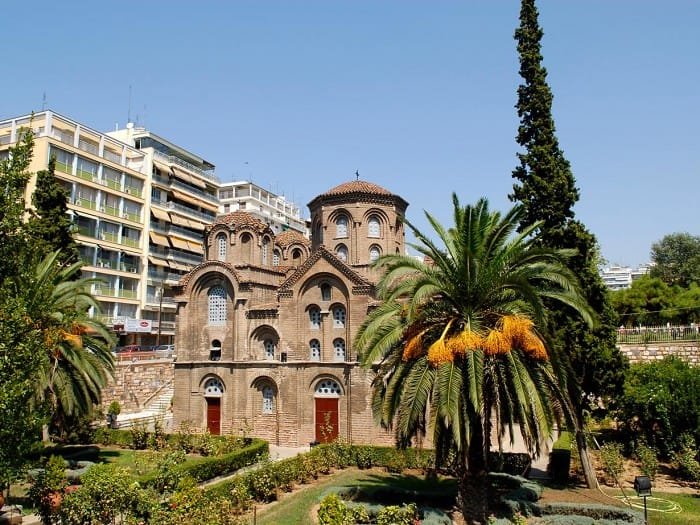
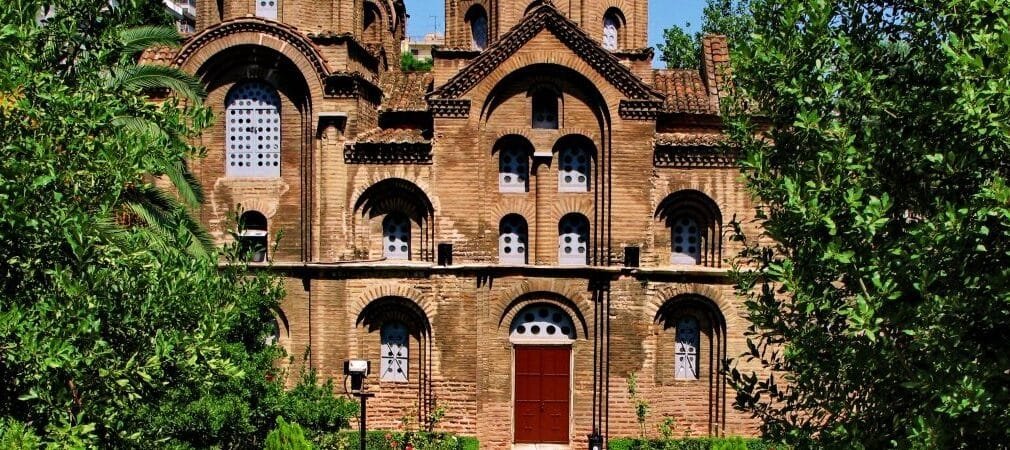
- Church of Panagia Chalkeon
Its characteristic feature is the vivid red color of the bricks on the outside of the church. Christoforos Protospatharios and Katepanos Lagouvardias, together with his wife Maria and his children Nikiforos, Anna and Katakali, built the church for the Virgin in 1028. The type of the church is cruciform tetragonal, with a dome, and its location near the neighborhood of coppersmiths gave the church its name (Panagia Chalkeon).
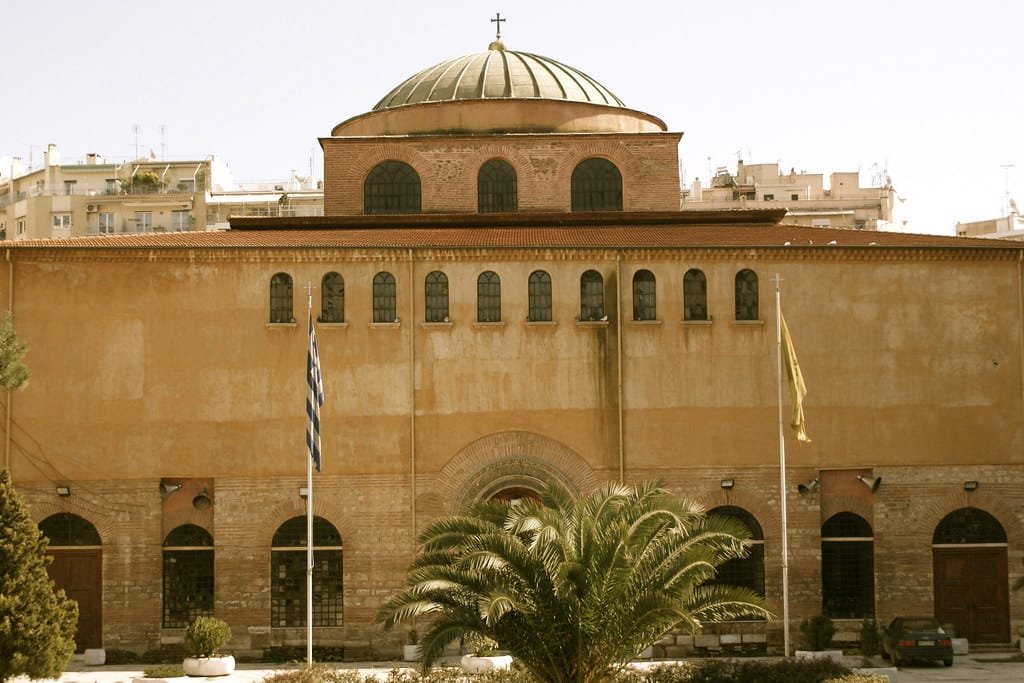
- Church of Agia Sophia
Church of Agia Sophia Square Ag. Sophia. (end of the 7th century – beginning of the 8th century). The temple is dedicated to Christ, the true Word and Wisdom of God, and was built on the site of a large early Christian basilica of the 5th century. A typical example of a transitional cruciform church with a dome and parapet, in imitation of the Hagia Sophia in Constantinople. The mosaic decoration inside the temple testifies to the high spiritual and artistic level of the city in different periods.
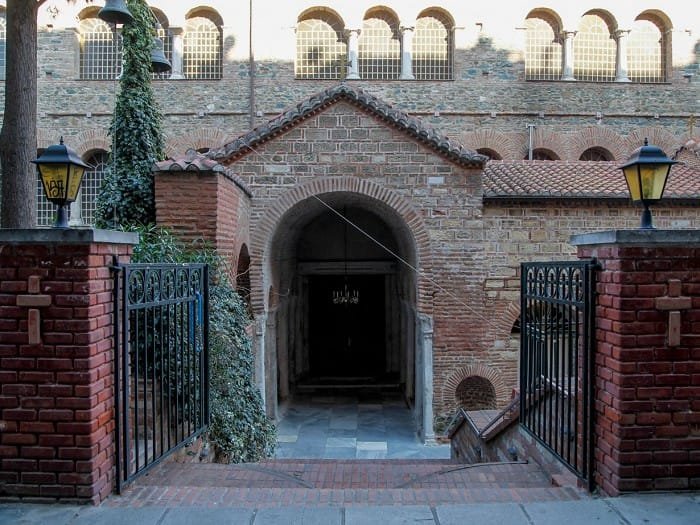
- Church of Panagia Achiropoiitou
The impressive church of Panagia Achiropoiitos owes its name to the devotional icon of Panagia, which, according to tradition, was not painted by human hands (A-chiropoiitos). The mosaics, wall paintings, decoration, and portable icons of Achiropoiitos are considered a real treasure of ecclesiastical art. It was built around the middle of the 5th century in the form of a three-aisled, wooden-roofed basilica with a narthex and a portico, on the ruins of a complex of Roman baths. Achieropoiitos is the first Christian church that was converted into a mosque immediately after the fall of Thessaloniki in 1430 by Sultan Murat.
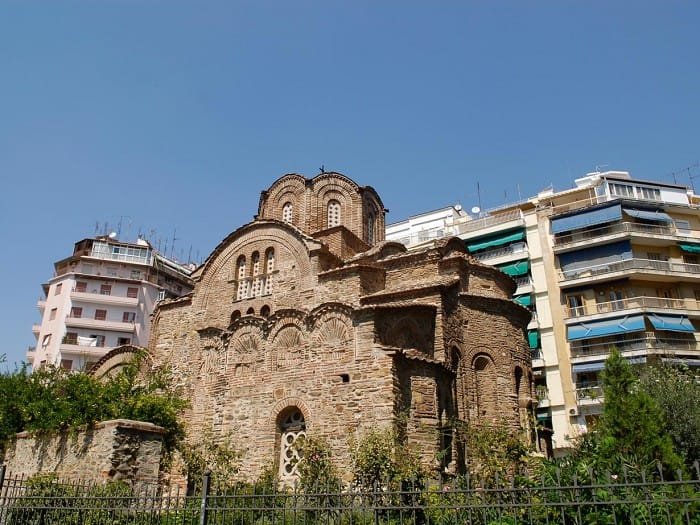
- Church of Agios Panteleimon
Not far from the Rotunda and the Arch of Galerius (Kamara) is the Church of Agios Panteleimon. An intellectual center of the 14th century, it was associated with the writing and teaching activity of the leading Hellenists Thomas Magistrou and Matthaios Vlastaris. It was built at the end of the 13th century as a catholicon of the monastery of Panagia Peribleptou, also known as the monastery of Mr. Isaac by the founder of the metropolitan of Thessaloniki, Iakovos, later monk Isaac. It belongs to the type of complex cruciform inscribed with a dome and a parapet, while two chapels are formed at the eastern end of the lateral arcades.
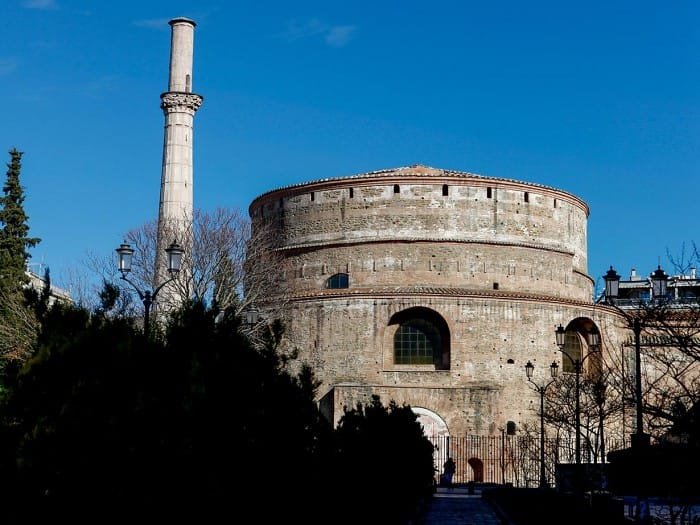
- Rotunda
The Rotunda is one of the most important and imposing monuments of Thessaloniki. With its architectural strength and the incomparable artistic wall mosaics inside, it is a special monument, which is uniquely balanced between the pagan and Christian worlds. It was founded at the beginning of the 4th century AD. century, probably as a temple of ancient worship or as a mausoleum of Constantine the Great, and is located on the axis of the procession road, which connected the triumphal arch of Galerius with the Palace complex, near today’s Navarino Square. The circular and domed iconic monument has a height of 29.80 meters, a diameter of 24.50 meters, a wall width of 6.30 meters, and can be architecturally compared only to the Pantheon in Rome. Shortly after its construction, it was converted into a Christian temple dedicated to the Incorporeal Saints or Archangels.
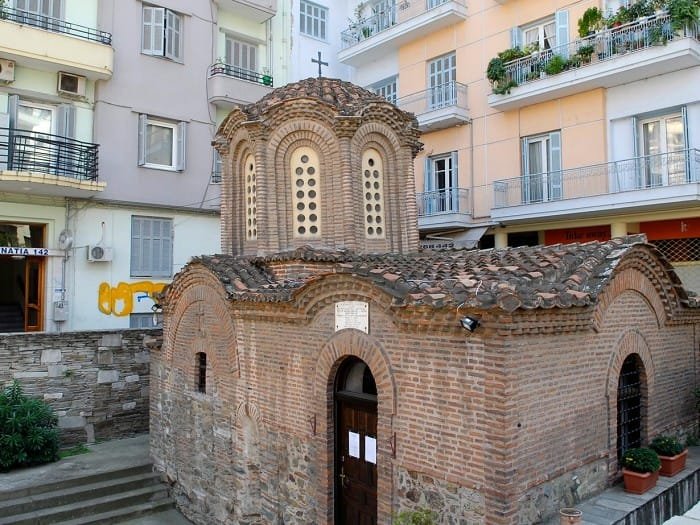
- Church of the Transfiguration of the Savior
Between the church of Panagia Gorgoepikou and the church of Ypapanti, there is the small church of the Transfiguration of the Savior. It was built around 1350, probably as a funerary chapel of a Byzantine monastery, and belongs to the type of quadrangular church inscribed in a square plan. Its frescoes date from the period 1350-1370 and are a product of Paleologian artistic creation.
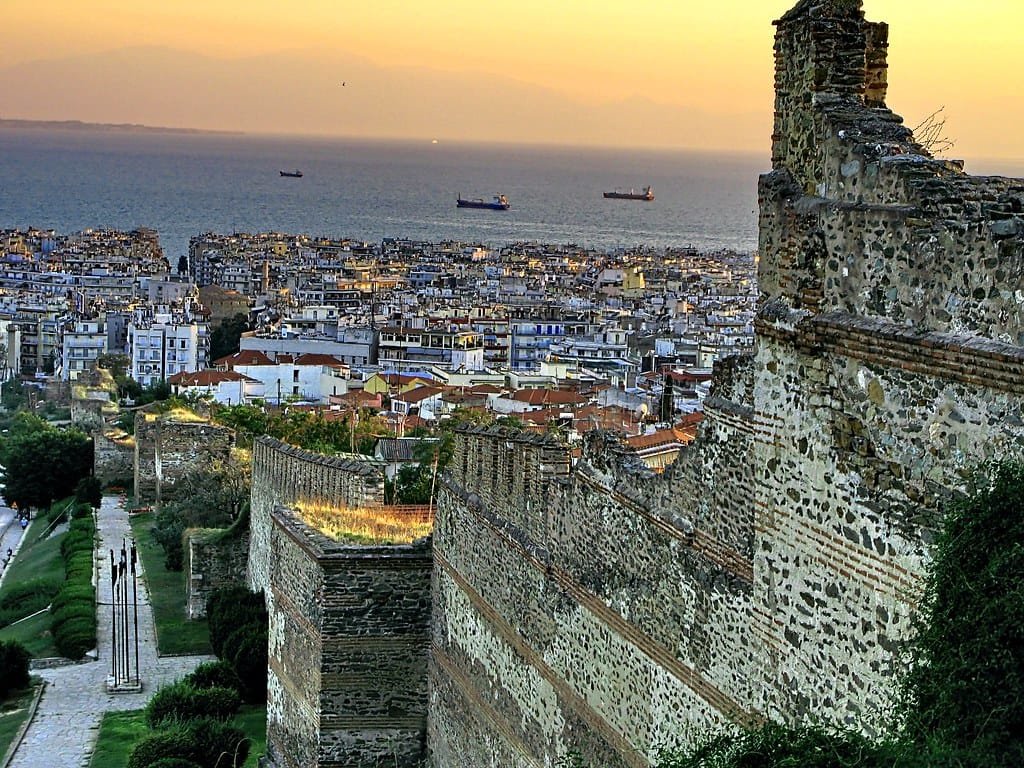
- Eastern Walls
Part of the history of Thessaloniki are its Walls, fortified structures for defense and protection from would-be invaders. The main fortification works were carried out during the reign of Emperor M. Theodosios at the end of the 4th century. The trapezoidal precinct in plan was reinforced with alternating triangular cantilevers and square towers, as well as a rampart, with the total perimeter of the walls reaching 8 km. In ‘Kastra’, as the whole area is known, another city is hidden, with old neighborhoods, especially loved by visitors and the residents of Thessaloniki, for the amazing sunset and the panoramic view of the city!
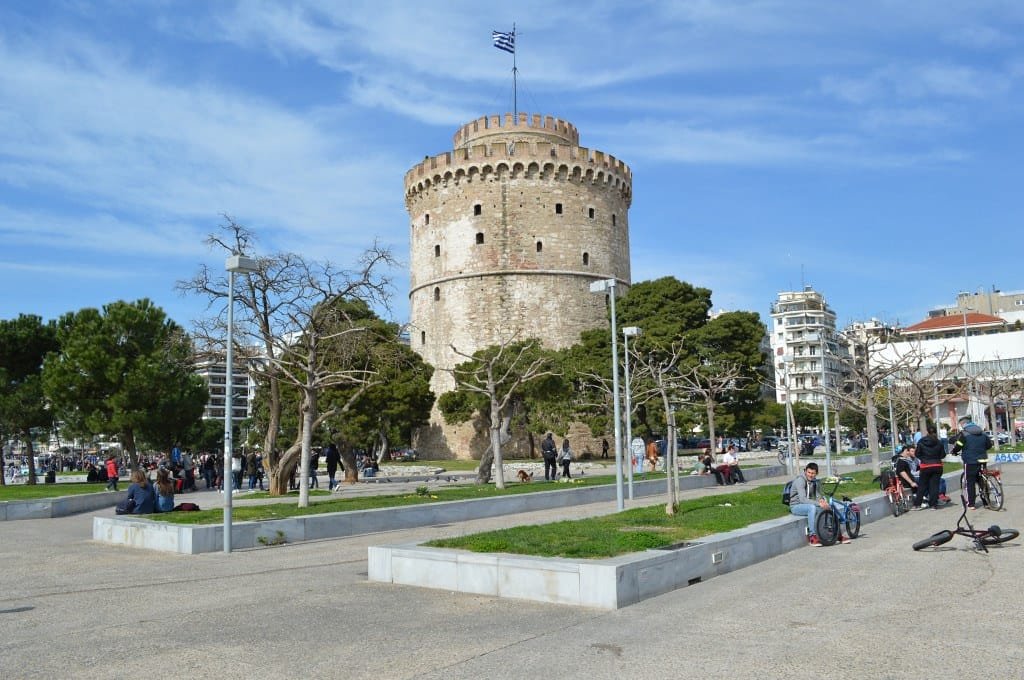
- White Tower
The White Tower, in the form that is preserved today, was built in the 15th century. In the context of the modernization of the fortifications, on the site of an older Byzantine tower. Today it houses the City Museum.