Thematic Route of Historical Monuments of the Ottoman Period. A 3 km long route, which aims to familiarize visitors with the monuments and characteristics of the historical stock of the period under Ottoman conquest (1430–1912) in the center of Thessaloniki.
Murat II conquered Thessaloniki in 1430, and the years of Ottoman conquest would last until the liberation of the city from the Greek army in 1912. In 1492, approximately 20,000 Jews expelled from Spain and looking for a new homeland came to Thessaloniki at the invitation of the Ottoman State. The coexistence of Greeks, Turks, and Jews gives Thessaloniki the multicultural character that will define it for many centuries. Currently, buildings of various uses are being built in the city, while many churches are being converted into mosques. The architectural style of Thessaloniki is now closer to the East, but without lacking constructions with European influences and styles.
The proposed route includes the following Ottoman Monuments:
- Yahouni Hammam (Flower Shops)
- Bezesteni
- Alcazar – Hamza Bey Mosque
- BEI HAMMAM (Paradise Baths)
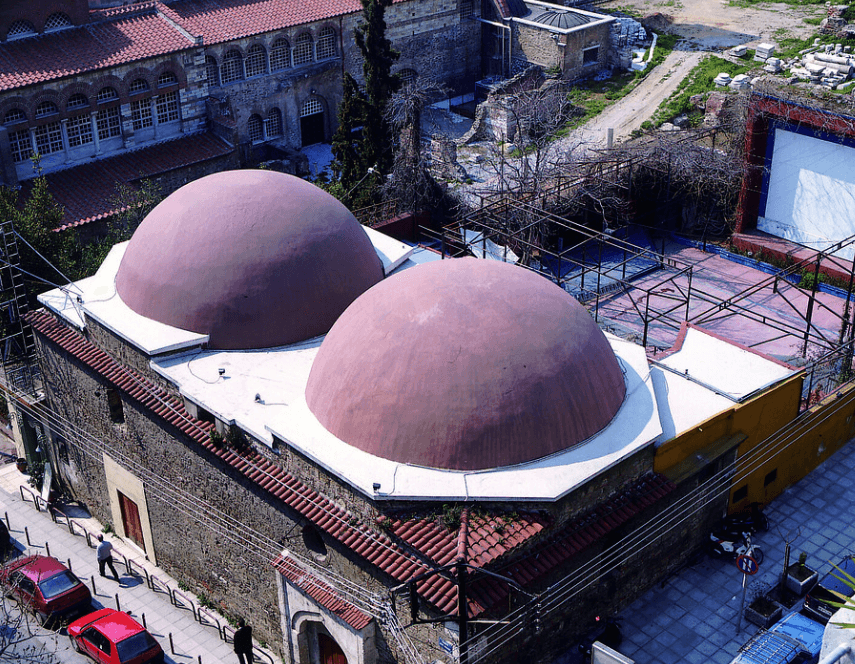
- Summer cinema ‘Glory’ – Jeni Hammam
- Alaja Imaret
- Loutra Finikas

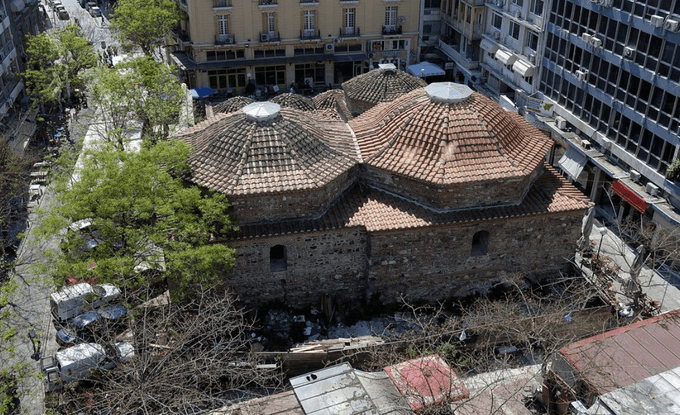
- Yahouni Hammam (Flower shops)
In the heart of the city’s central market, in the neighborhood where you met a large number of Jewish shops, is the Ottoman bath known by a multitude of names. Yahudi hamam (Jewish hammam), Pazar hamam (market bath), women’s bath. It was built in the 16th century by Khalil Aga, an official of the Harem of the Gate, and welcomed both men and women in separate rooms. apartments. It is built with stones and bricks according to the Byzantine building system, and inside it maintains the typical structure with cold, warm, and hot spaces.
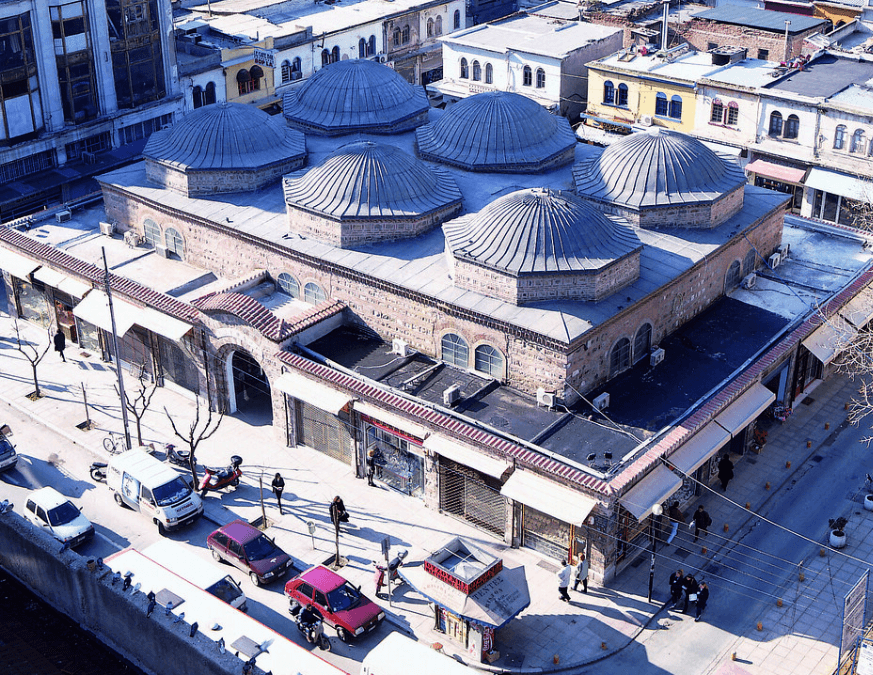
- Bezesteni
Markets that sold luxurious fabrics and jewelry, the bezestenia – from the Arabic word bez, which means cloth – housed the guilds of artisans and merchants. Evliya Celebi, the most important Ottoman traveler of the 17th century, characterizes the Bezesteni of Thessaloniki as one of the most beautiful markets in the Balkans. The building is rectangular and divided by two central pillars into six individual areas, each of which is sheltered by a stone-built dome. Centrally, on each of the four sides, there is an entrance that led the visitor to the more than one hundred shops of its heyday.
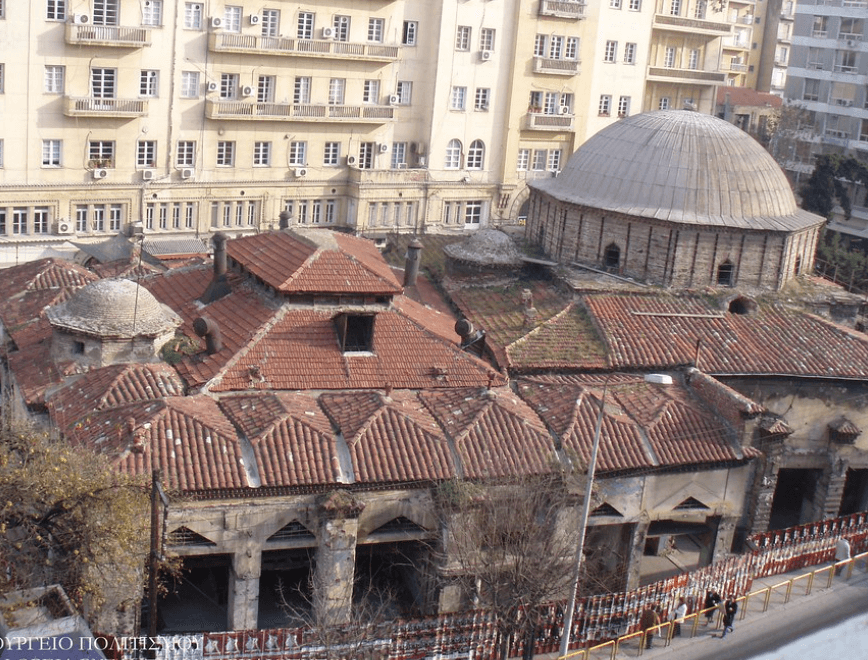
- Alcazar – Hamza Bey Mosque
The Hamza Bey Mosque is the largest surviving mosque in Greek territory despite the fact that it was built in 1467 by order of Hafsa Hatun in honor of her father, the famous Ottoman officer Hamza Bey. It is a typical early example of Ottoman architecture in the Balkans. Surrounded by arcades. These arcades were created using twenty-two marble columns with fifteen early Christian capitals that were detached by order of an Ottoman official from I.N. Agios Minas and the Rotunda.
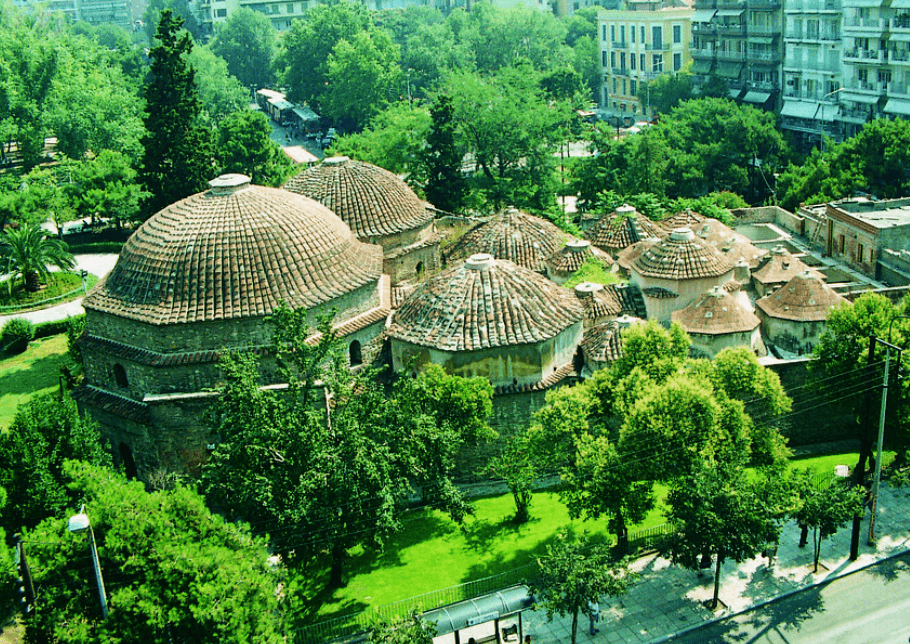
- BEI HAMMAM (Paradise Baths)
Built in 1444 by order of Murat II himself, the conqueror of Thessaloniki, the Bey Hammam is the first Ottoman building to be erected in the city, showing the relationship that for the Ottomans the purification of the body has with the purification and purification of the soul. It is the largest hammam in Thessaloniki and one of the largest in the Balkans, and it operated for more than five centuries until the 1960s. It has a large and more luxurious section for men and a smaller one for women with a separate and more discreet entrance.
- Summer cinema ‘Glory’ – Jeni Hammam
Among the most well-known places connected with the Ottoman past of Thessaloniki, the Jeni Hammam was most likely built on top of an older Byzantine bath. The order for its creation was given by the then Kehagias of the city, Khusrev Keduda, providing space for both men and women. ‘Glory’, which follows the monument to this day. This transformation caused major modifications in the architecture of the monument, mainly in its interior spaces.
- Alaca Imaret
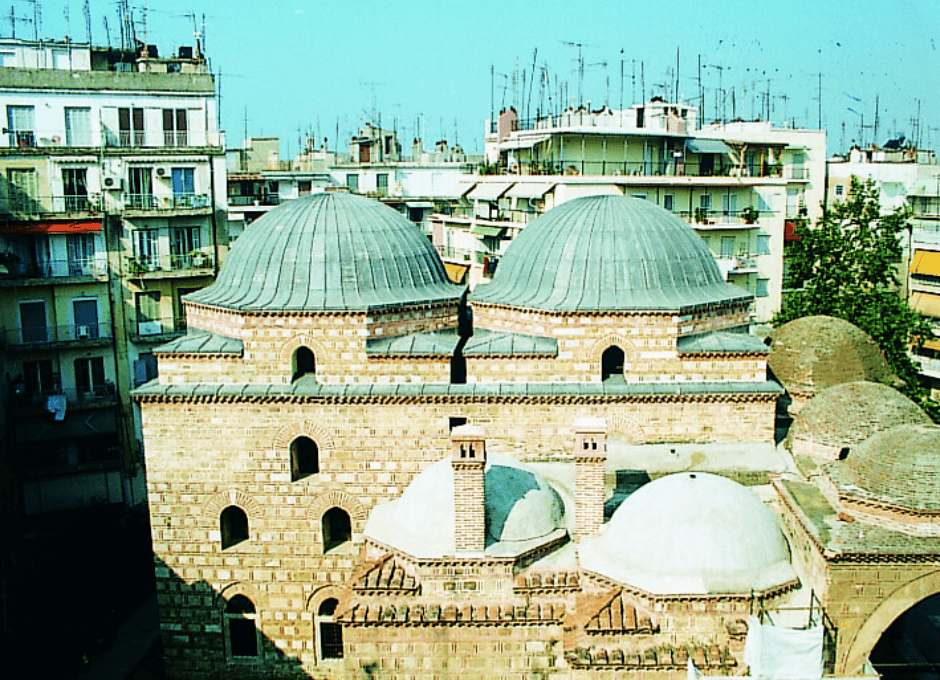
Amidst a densely populated area, north of Agios Dimitrios and Kassandros streets, Alaca Imaret dominates with its exceptional architecture. As the foundation inscription testifies, Alaca Imaret was built in 1484 by Isak Pasha, Vizier under Mohammed II, and took its name from the impressive colorful minaret that completed the building. Also functioning as a poorhouse, Alacja Imaret has a central prayer area, apartments on the sides where the sissites were probably held, and an external portico supported by columns. The monument is an important cultural site.
- Loutra Finikas
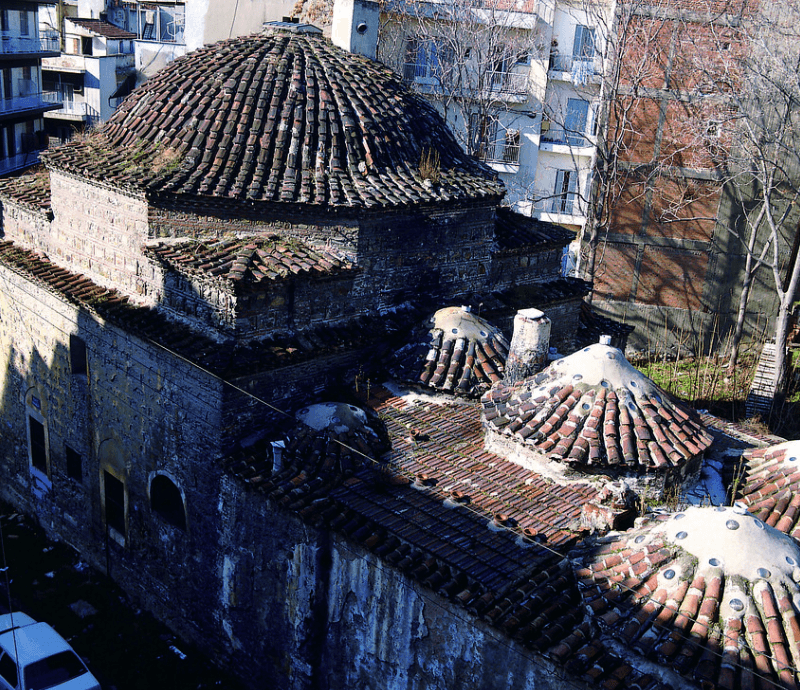
To the west of the city, in the area of the Holy Apostles, there is another hammam from the Ottoman period. The Pasha hammam was built at the beginning of the 16th century by the governor of Thessaloniki, vizier Jezeri-Zade Kotza Kasim Pasha. Its original use was a women’s bath, but later a men’s section was added. It was the last Ottoman hammam that operated in the city until 1981, known to the people of Thessaloniki as the Phoenix Baths. Today it is used by the Ephorate of Antiquities of the City of Thessaloniki as a place to store archaeological finds discovered during the excavation work of the metro.