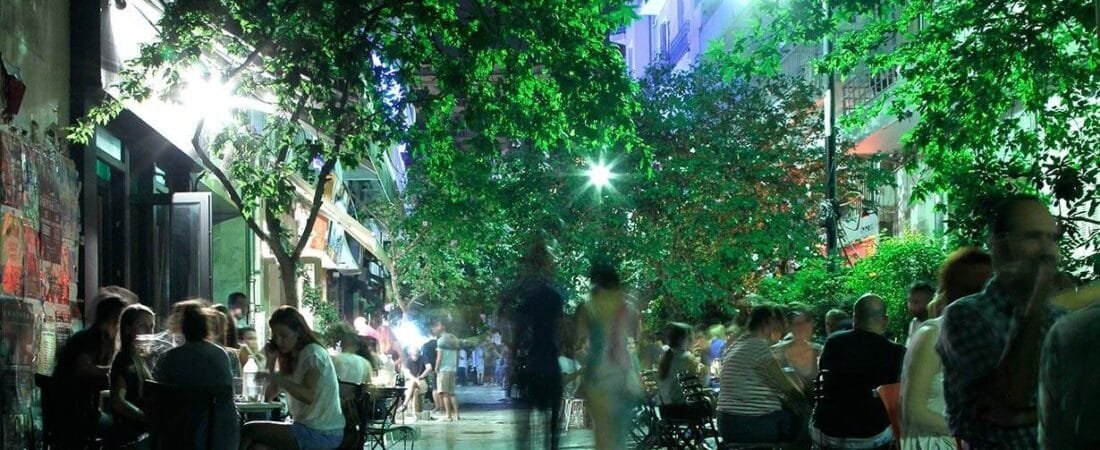
In the heart of Thessaloniki, the streets of Iktinou, Zefxidos and nearby Pavlou Mela form a compact quarter where history, local routines and contemporary leisure meet. Today, the area is known for its pedestrian-friendly atmosphere and its lively succession of cafés, bistros, cocktail bars and informal meeting places. Yet its identity was not created overnight. The streets first belonged to the everyday fabric of the neighborhood, shaped by school buildings, residential entrances and the regular movement of students, families and nearby residents. Their central position made them familiar, but not necessarily destinations in their own right.
The change developed gradually as the streets became more comfortable for walking and spending time outdoors. Small, carefully designed venues began to occupy ground-floor spaces, bringing coffee, food and drinks into a setting that felt relaxed rather than formal. As more people paused at outdoor tables or met friends after work and classes, the character of the quarter evolved. Residents discovered new reasons to remain close to home, while visitors found an inviting alternative to Thessaloniki’s busier commercial avenues. Each new opening added to the area’s appeal without erasing its modest, neighborhood-scale origins.
Iktinou and Zefxidos now have a loyal following because they combine several qualities that are central to urban life in Thessaloniki. During the day, they offer an easy setting for coffee, conversation and an unhurried meal. As afternoon turns to evening, the same streets take on greater energy, with diners, friends and groups seeking drinks or casual entertainment. Pavlou Mela adds to this network of nearby choices, reinforcing the sense of a connected social quarter rather than a single isolated strip. The result is a welcoming destination where youthful energy, local life and central-city convenience come together naturally, while traces of the former school streets remain part of its distinctive character.
Iktinou and Zefxidos offer a compact, pedestrian-friendly setting where Thessaloniki can be experienced at a distinctly human pace. With car traffic absent or greatly reduced, the streets make room for easy walking, outdoor tables and brief encounters that often become longer conversations. Their scale encourages visitors to look around rather than hurry toward a destination: façades, shopfronts, chairs and changing groups of people form part of the streetscape. The atmosphere is lively without feeling overwhelming, combining the convenience of a central location with the relaxed rhythm of a neighbourhood gathering place.
The venues along these streets have varied personalities, yet they share an informal and approachable character. Small cafés welcome early visitors for coffee, while bistrots provide light meals and unhurried lunches. Later in the day, the same spaces may become settings for an afternoon pause, a drink or a meeting with friends. Cocktail bars contribute a more polished evening note, but the area is not defined by nightlife alone. Its appeal lies in the continuity between different uses and hours: a table occupied in the morning can give way to another group at dusk, while each establishment adds colour and texture without breaking the streets’ cohesive mood.
Time of day changes the energy noticeably. Mornings are generally quieter, making them suitable for coffee, observation and a calm start in the city centre. Around midday, the pace becomes more social as people meet for a snack or light meal. In the late afternoon, outdoor seating fills gradually, and evening brings a livelier blend of conversation, drinks and informal gatherings. Rather than treating Iktinou and Zefxidos as places to pass through, visitors are encouraged to linger. This unhurried experience captures an important aspect of contemporary Thessaloniki: urban culture expressed not through grand spectacle, but through shared space, everyday sociability and the pleasure of staying awhile.
Compared with the calm, café-centered character of Iktinou and the lively pedestrian atmosphere of Zefxidos, Pavlou Mela introduces a more commercial rhythm. Its storefronts invite visitors to browse, shop, and complete everyday errands, giving the district a practical energy alongside its leisure appeal. Clothing shops, specialty retailers, small businesses, and services share the street with cafés, bars, and other meeting places favored by Thessaloniki residents. The result is a setting that feels active throughout the day and develops a distinct social character after work and into the evening.
Walking toward Pavlou Mela from the pedestrian streets reveals several layers of urban life within a short distance. The route may begin among school buildings, apartment entrances, and quieter residential surroundings before opening onto restaurants, cafés, and informal gathering spots. Farther along, commercial storefronts create a steady flow of local customers, while nearby bars and popular evening haunts bring a different audience after sunset. Pavlou Mela should therefore be understood as a street with its own identity, not simply as an extension of Iktinou or Zefxidos. Its appeal lies in the way retail activity and social life coexist without losing their everyday, neighborhood quality.
A natural walk through the area can begin on Iktinou, continue across Zefxidos, and then lead toward Pavlou Mela before turning into one of the surrounding side streets. This compact route allows visitors to move gradually from pedestrian cafés to independent shops and then toward venues where locals meet for coffee, drinks, or dinner. Taking time to explore beyond the main crossings often reveals smaller businesses and less conspicuous corners that express the district more clearly than its busiest addresses. Together, the three streets form an easily navigable part of central Thessaloniki, where browsing, errands, architecture, and evening entertainment can be combined in a single walk. The experience is most rewarding when visitors follow their curiosity rather than treating the area as a fixed itinerary.
Near the junction of Mackenzie King and Iktinou Streets, the church-catacomb of Agios Ioannis Prodromos, or St. John the Baptist, offers a striking final glimpse into Thessaloniki’s layered history. A flight of stairs leads down from lively central streets into a small, cool and green oasis, where the sounds of cafés, conversation and passing pedestrians become noticeably distant. Although the site lies at the heart of the modern city, its atmosphere feels remarkably removed from the surrounding urban activity.
The archaeological remains preserve several distinct chapters of Thessaloniki’s past. The location was earlier connected with a Roman bath, reflecting the public and urban character of the ancient city. It later served as an early Christian baptistery, while the preserved catacombs associated with the church reveal the religious and funerary practices that followed. These successive uses make Agios Ioannis Prodromos one of the city’s most notable examples of underground heritage, where Roman infrastructure and early Christian history remain closely connected beneath the contemporary street plan.
The contrast between the world above and below is central to the site’s appeal. At street level, Iktinou, Zefxidos and Pavlou Mela are defined by pedestrian life, outdoor cafés, restaurants, shops and the easy sociability of Thessaloniki’s city center. Below ground, the archaeological setting is quieter and more contemplative, with shaded greenery and ancient masonry creating a sense of refuge. Visiting the church-catacomb therefore adds historical depth to an otherwise vibrant leisure district. The area is especially memorable because commerce, entertainment, landscape and heritage coexist within a few steps, allowing visitors to move from contemporary urban pleasure into the Roman and early Christian past of Thessaloniki.