Introduction to the Via Carpatia
The Via Carpatia highway project represents a significant advancement in the transportation landscape of Europe, particularly impacting Central and Eastern European countries. This ambitious infrastructure initiative aims to establish a major transport corridor that links the Baltic Sea to the Adriatic Sea, symbolizing a vital overland route that fosters economic growth and connectivity among various nations.
The inception of the Via Carpatia can be traced back to collaborative efforts among several countries, including Poland, Slovakia, Hungary, Romania, and further south to Greece. Each participant recognizes the potential benefits this roadway can bring, not only to their respective economies but also in promoting regional stability and cooperation. By facilitating the movement of goods and people, the highway is set to enhance trade routes that can contribute to thriving local economies.
This project is particularly noteworthy given the context of the European Union’s ongoing initiatives to improve infrastructure within its member states, focusing on reducing disparities and ensuring that less connected areas benefit equally from developments. The Via Carpatia aligns with these objectives by ensuring that remote regions are more accessible, thereby integrating them into broader economic networks. Furthermore, the project plays a crucial role in improving transit times and supply chain efficiencies, which are essential components for businesses operating across borders.
As the Via Carpatia highway progresses, it is positioned not only as a transportation link but also as a vehicle for enhancing regional dialogue and cooperation among the involved nations. Its strategic development underscores a collective commitment to investing in infrastructure that supports sustainable economic development and connectivity across Europe, ultimately fostering a more interconnected region.
Strategic Importance of the Highway
The Via Carpatia Highway is poised to play a pivotal role in enhancing economic growth and connectivity among the countries it traverses. This ambitious infrastructure project is designed to create a robust transport corridor that links Central and Eastern Europe, bridging various national economies while presenting numerous strategic advantages.
One of the primary objectives of the Via Carpatia Highway is to strengthen freight transport across the participating nations. By facilitating smoother transit for goods, the highway is expected to significantly reduce transport times and costs. This efficiency in freight logistics will not only improve trade relations between states but also attract foreign investments, boosting regional economies.
Moreover, the highway’s route, stretching from Poland to Greece, covers several economically significant regions. As it runs through diverse landscapes and industrial areas, it enables localized economic benefits for cities and towns along its path. Enhanced access to markets will encourage businesses to expand their operations, thereby driving job creation and economic development in these areas.
Furthermore, the Via Carpatia is designed with both economic and environmental considerations in mind. By promoting intermodal transport solutions, it aims to reduce reliance on less efficient means of transport, thereby minimizing the carbon footprint associated with freight transport. This approach aligns with contemporary sustainability goals, contributing to a greener logistics network.
In conclusion, the Via Carpatia Highway stands out as a critical development in regional connectivity and economic growth. Its strategic importance lies not only in facilitating trade and strengthening freight transport but also in fostering collaboration among nations that can lead to unprecedented economic opportunities. The initiative heralds a new era of connectivity that could redefine the economic landscape of Central and Eastern Europe.
Development Phases and Challenges
The Via Carpatia project, an ambitious infrastructure initiative aimed at enhancing connectivity across Central and Eastern Europe, has a timeline that anticipates completion by 2030. This extensive undertaking encompasses multiple phases, each focusing on specific segments of the highway to ensure systematic and efficient development. The project is envisioned to link various countries, thereby fostering trade and improving accessibility.
To date, countries such as Poland, Hungary, and Romania have taken significant strides in initiating the infrastructure work required for the project. Each nation is responsible for the development of specific sections, which involves not only construction but also crucial upgrades to existing roadways. This aspect of the project brings forth various technical challenges that are inherent to infrastructure development.
Among the challenges faced during the ongoing development phases are environmental concerns, geological conditions, and financial constraints. The upgrade of existing roadways often requires addressing pre-existing issues that can complicate construction efforts. For instance, soil stability and the need for appropriate drainage systems are critical factors that must be resolved to ensure the longevity and safety of the highway.
Furthermore, each participating country’s regulatory framework can pose additional obstacles, necessitating cooperation and coordination among various governmental bodies. This collaboration is essential not only for navigating bureaucratic processes but also for synchronizing timelines and project standards. Moreover, ensuring that environmental assessments are conducted meticulously helps to mitigate negative impacts, thereby aligning with sustainable development goals.
In conclusion, the Via Carpatia project’s timeline is a multifaceted journey, with numerous phases that involve careful planning and a collaborative approach to overcome technical challenges. The commitment to enhancing this highway will ultimately link nations, providing a much-needed boost to regional connectivity by 2030.
Future Implications and Extended Reach
The Via Carpatia Highway Project is set to significantly reshape the transport landscape of Europe, especially with Turkey’s recently announced involvement in the project. This highway will not only enhance connectivity within Central and Eastern Europe but also extend its reach towards Istanbul, a critical logistical hub that bridges Europe and Asia. The implications of this expansion are profound and multifaceted, offering numerous opportunities for development and cooperation.
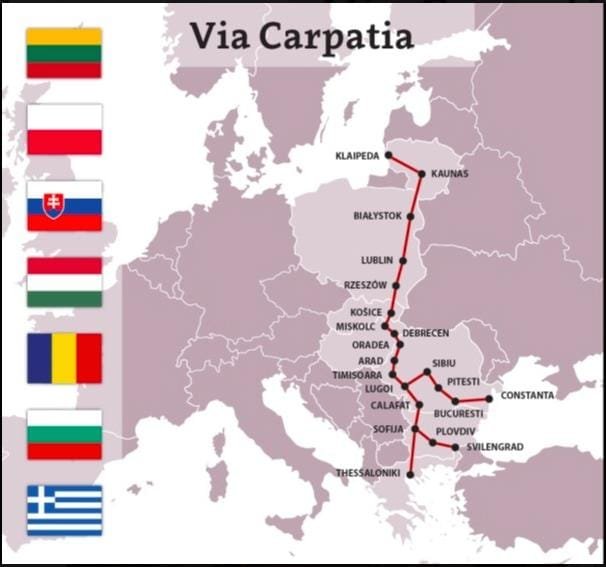
Firstly, the integration of Turkey into the Via Carpatia project is expected to foster stronger economic ties between nations along the route. As the highway extends towards Istanbul, it will facilitate smoother trade and movement of goods, thereby boosting local economies. This enhanced connectivity is likely to attract foreign investments, as businesses seek to capitalize on improved access to previously underserved markets. In turn, this could lead to job creation and spur local development initiatives that rely on the efficient transportation of resources.
Furthermore, the long-term effects of the highway on regional cooperation cannot be overlooked. As countries collaborate on infrastructure projects like the Via Carpatia, they pave the way for greater political and economic alliances. This unified approach not only enhances transportation networks but also promotes cultural exchanges and mutual understanding between diverse populations. The impact on the transport map of Europe is expected to be transformational, as previously isolated regions become interconnected, leading to a more cohesive and integrated continent.
Additionally, with the increase in traffic along this route, there will be a necessity for improved supporting infrastructure. This includes the development of service areas, logistics hubs, and advanced traffic management systems. As nations proceed with these enhancements, they will also consider environmental impacts, aiming to create a sustainable transport model that balances economic growth with ecological responsibility.
In conclusion, the future of the Via Carpatia Highway, especially with Turkey’s involvement and the proposed extension to Istanbul, is promising. It stands to significantly influence regional development and economic cooperation, thereby redefining the transport landscape of Europe for years to come.