
A New Release at Aristotelous Square
From 8 to 14 October 2026, Olympion and Pavlos Zannas venues at Aristotelous Square welcome audiences to experience Lance Oppenheim’s Primetime, a provocative psychological thriller starring Robert Pattinson. The film examines the uneasy intersection of journalism, true crime, reality television and public punishment, raising timely questions about the responsibilities of those who turn real-life investigations into entertainment.
The Story Behind the Broadcast
Set in 2006, the film follows television presenter Chris Hansen, who finds himself confronted with a significant professional opportunity: a prime-time slot dedicated to live operations targeting suspects of sexual crimes against minors. What initially appears to be a breakthrough in television programming soon becomes a morally complex situation, placing its central figure under intense pressure.
When Investigation Becomes Spectacle
Primetime explores the boundaries between public interest and public exposure. By focusing on televised operations and their consequences, the film considers how the language of news can merge with the conventions of reality shows. The promise of immediacy and accountability may also create a culture in which accusation, confrontation and humiliation become forms of entertainment.
A Disturbing Contemporary Question
Oppenheim’s film is not simply interested in the mechanics of a television production. It also investigates the psychological effects of visibility, ambition and moral compromise. Pattinson’s presence reinforces the tension at the heart of the story, where professional success is inseparable from the consequences of placing vulnerable subjects and alleged offenders before a mass audience.
For viewers seeking challenging cinema, Primetime offers a sharply focused examination of media power and ethical responsibility. Its screening at Olympion and Pavlos Zannas provides an opportunity to reflect on how easily the pursuit of justice can become indistinguishable from the pursuit of spectacle.

A World Without Dreams
Bi Gan’s Resurrection presents a haunting society in which people deliberately abandon dreams to extend their lives. In this world, dreaming is regarded as dangerous because it disturbs the boundaries between memory, reality, and time. Yet a small number of individuals continue to dream, and their visions begin to warp the very fabric of existence. The premise provides Bi Gan with a philosophical foundation for exploring cinema as an art form built from illusion, perception, and desire.
Five Dreams, Five Senses
The film unfolds through five dreams, each associated with one of the senses. Rather than functioning as separate episodes, these sequences form an intricate passage through time. Their chronological movement corresponds to different periods in cinematic history, allowing Bi Gan to reflect on how filmmaking has evolved while preserving its essential power to astonish. Images, sounds, textures, fragrances, and tastes become gateways into distinct emotional and visual worlds.
Time as a Cinematic Material
In Resurrection, time is not simply a structure for telling a story; it is a substance that can bend, fracture, and expand. The film’s dreamers move through eras and sensations with a fluidity that challenges conventional narrative logic. Bi Gan’s direction encourages audiences to surrender to atmosphere rather than seek immediate explanations. Long passages, carefully composed frames, and elusive transitions create the impression of memories being discovered rather than scenes being constructed.
A Celebrated Return
With its ambitious concept and intensely poetic style, Resurrection confirms Bi Gan’s fascination with the relationship between dreams and cinema. The film asks whether a longer life without imagination would truly be meaningful, and whether dreaming may be essential to human freedom. Its recognition with the Special Jury Prize at the 78th Cannes Film Festival reflects the work’s singular artistic vision: mysterious, demanding, and deeply committed to the possibilities of cinematic experience.
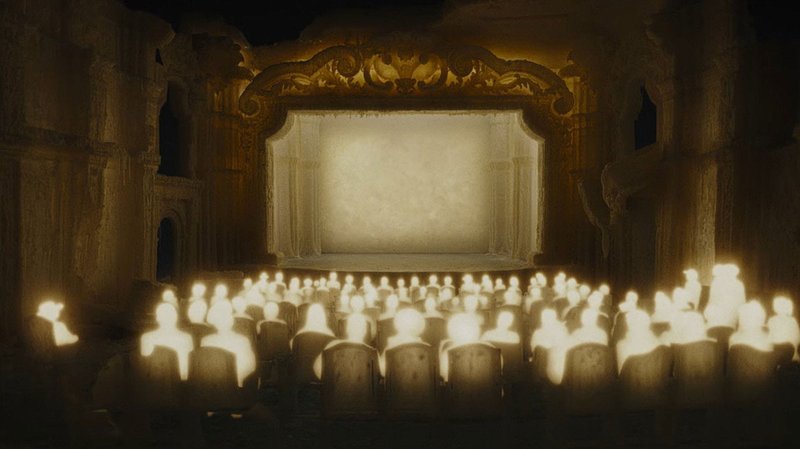
Three Distinctive Films in the Spotlight
Three ambitious films continue their successful course in the festival’s theaters, offering audiences an impressive range of cinematic experiences. From an extravagant comedy and a politically urgent documentary to a contemplative international drama, the selection reflects the diversity and vitality of contemporary cinema.
Digger: Comedy on a Catastrophic Scale
Among the most anticipated titles is Digger, the new film by Alejandro González Iñárritu. Described as an outrageous comedy of catastrophic proportions, the production marks the acclaimed, multi-award-winning director’s first English-language feature since The Revenant. Tom Cruise stars in what is presented as one of the most striking transformations of his career, suggesting a performance that departs significantly from his familiar screen image. With its ambitious scale, provocative humor, and celebrated creative team, the film promises an unpredictable theatrical experience.
Naza: A Documentary of Witness
Naza, the shocking documentary by Yuval Abraham and Rachel Szor, has already stunned audiences and critics at the recent Venice Film Festival. Shot in utmost secrecy at night on rooftops in Tel Aviv, the film examines the mass killings of Palestinian civilians in the Gaza Strip. Its clandestine production and uncompromising subject matter give the documentary a particular urgency, inviting viewers to confront painful realities through an intensely focused cinematic lens.
Silent Friend and the Passage of Time
The program also features Silent Friend, the new film by Oscar-nominated director Ildikó Enyedi, whose previous work has earned international acclaim. Following her triumphant return, the film revolves around a majestic century-old tree that quietly observes the transformations unfolding across three human lives. Through this unusual perspective, Enyedi explores memory, connection, and the passage of time. After its Greek premiere at the 66th Thessaloniki International Film Festival, the film stands as a graceful and reflective addition to this year’s program.