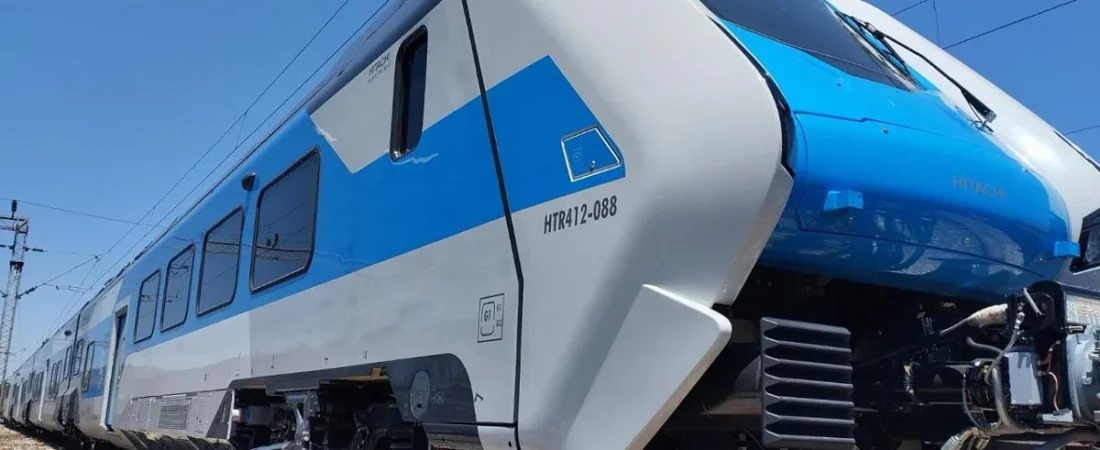
Overview of the Blues IC Testing
The ongoing testing of the new Blues IC trains in Thessaloniki marks a significant milestone for Greece’s rail infrastructure. This innovative project is aimed at modernizing intercity train services and enhancing the travel experience for passengers. The Blues IC trains are designed to offer increased comfort and efficiency, reflecting advancements in rail technology.
Currently, testing is taking place on select routes within the Thessaloniki region. These include key corridors that connect Thessaloniki with other major cities, such as Athens and Larissa. The specific routes chosen for testing are vital, as they not only serve a high volume of passengers but also represent critical links in the national rail network. By focusing on these routes, the testing seeks to ensure that the Blues IC trains can operate effectively under real-world conditions and handle the expected passenger load.
The significance of this testing phase cannot be overstated. It serves as an opportunity to evaluate the performance of the trains in various aspects, including speed, efficiency, safety systems, and overall passenger comfort. Furthermore, successful testing will pave the way for the full rollout of the Blues IC trains, which are anticipated to enhance connectivity and foster economic growth in the region. As the Greek rail network continues to evolve, the Blues IC testing represents a progressive shift towards adopting modern rail solutions and improved service delivery to its users.
Key Details About the Blues IC Trains
The new Blues IC trains represent a significant advancement in rail transportation technology, specifically designed for the urban environment of Thessaloniki. These hybrid multiple units (HMUs) incorporate cutting-edge design and efficient engineering aimed at enhancing the public transport experience. Developed by an industry-leading manufacturer, the Blues IC trains boast a modern aesthetic that blends seamlessly with the city’s infrastructure while offering enhanced functionality.
One of the most noteworthy features of the Blues IC trains is their capacity. Each train is designed to accommodate a larger number of passengers than previous models, enabling them to effectively serve the growing population and increasing ridership demands. The spacious design does not compromise comfort, as the interiors are equipped with ergonomically designed seating, ample legroom, and technological amenities, ensuring a pleasant travel experience. Furthermore, the incorporation of accessibility features aligns with universal design principles, making them suitable for all passengers, including those with mobility challenges.
The hybrid multiple unit technology utilized in the Blues IC trains is an amalgamation of diesel and electric power. This dual-purpose drivetrain not only significantly reduces greenhouse gas emissions but also enhances operational efficiency. The trains are equipped with advanced energy recovery systems that harness kinetic energy during braking, converting it back into electrical energy. Such innovations align with urban sustainability goals, allowing for a more environmentally friendly mode of transport crucial for modern cities.
In summary, the specifications of the Blues IC trains underline their importance in revolutionizing Thessaloniki’s public transport landscape, reflecting a commitment to sustainability, passenger comfort, and technological progress. By integrating modern design with hybrid technology, these trains are expected to play a pivotal role in enhancing the overall efficiency of transportation services in the region.
Route Testing Breakdown: Thessaloniki to Athens
As part of an extensive evaluation of the newly introduced Blues IC trains, a thorough analysis of the testing routes is currently being undertaken. Departing from Thessaloniki, these trials will initially encompass segments leading to Platy, Katerini, and Larissa. Each route is meticulously selected to assess various operational parameters essential for long-distance travel, such as train speed, safety features, and onboard passenger experience.
The segment from Thessaloniki to Platy will serve as an initial testing ground for basic functionalities, including acceleration and braking systems. Following this, the route extends to Katerini, which is anticipated to facilitate the evaluation of train handling and navigation in urban areas. Finally, the leg from Katerini to Larissa will play a critical role in understanding how the trains adapt to longer stretches and varied terrain, thus allowing the monitoring of performance metrics over significant distances.
Upon completing these initial tests, the Blues IC trains will move towards the crucial Thessaloniki-Athens corridor, a vital link for many commuters. This corridor is expected to host increased passenger volumes, and the integration of these new trains could significantly alleviate current travel duration and improve overall service quality. Anticipated benefits for commuters include reduced travel times, enhanced comfort, and more frequent service intervals, all contributing to a more efficient regional transportation network.
The logistics of these trials involve coordinated scheduling with operational staff, ensuring that all tests are carried out seamlessly while maintaining current services. By focusing on these key routes, the testing regime aims to establish a robust framework for future train operations, ultimately benefiting not only the transportation system but also the commuter experience as a whole.
Future Implications and Conclusion
The testing of the new Blues IC trains in Thessaloniki marks a pivotal moment for intercity travel in Greece, suggesting a future where rail transport significantly improves in various aspects. One of the core implications of these tests is the anticipated enhancement in passenger experience. With modernized features and improved onboard amenities, travelers can expect a more comfortable and enjoyable journey. This is particularly important as the demand for efficient and reliable rail services increases.
Another key aspect is operational efficiency. The hybrid technology utilized in these new trains is designed to be not only faster but also more reliable, thereby reducing delays and improving scheduling. Currently, one of the significant challenges faced by the rail system is its capacity to maintain punctuality. The integration of advanced systems and technology can potentially transform the operational landscape, affecting both the frequency and the reliability of rail services across the region.
In addition to passenger comfort and operational factors, these innovations contribute positively to environmental sustainability. The hybrid nature of the Blues IC trains allows for reduced carbon emissions when compared to traditional diesel trains, aligning with Greece’s commitment to greener transit solutions. This shift not only addresses immediate transportation needs but also aids in achieving long-term environmental goals.
Looking forward, these developments indicate a promising horizon for rail travel in Greece. Enhanced connectivity, reduced travel times, and improved services may not only attract more passengers but could also play a crucial role in supporting economic growth. As these tests conclude and the new trains enter service, travelers in Greece can look forward to a new era of rail travel, characterized by efficiency, sustainability, and a focus on passenger experience. Indeed, the progress made with the Blues IC trains has the potential to redefine the future of rail travel in the region.