The expanded Balkan Horror tribute at the 67th Thessaloniki International Film Festival, presented within the Meet the Neighbors section, offers a distinctive lens through which to view the region’s cinema. Its films treat horror as more than a vehicle for suspense or entertainment. Instead, terror becomes a method of examining cultural memory, political history, social anxiety, and wounds passed from one generation to the next. The program suggests that the most disturbing forces are often not imported from distant supernatural worlds, but embedded in familiar lives and recognizable histories.
Across the selection, homes, family archives, rural landscapes, urban neighborhoods, construction sites, forests, and historically burdened places acquire an uncanny charge. Ordinary environments become threatening when buried violence, inherited guilt, or unresolved trauma rises to the surface. Villages may preserve old beliefs alongside old resentments, while cities can conceal forms of alienation and fear beneath their modern façades. This tension between the familiar and the strange gives the tribute its central idea: the everyday can become frightening when its hidden meanings are exposed.
The program also reflects the remarkable breadth of Balkan genre filmmaking. Folk horror and ghost stories appear beside zombie cinema, slashers, body horror, psychological breakdowns, black comedy, splatter, and cult film. Other works resist classification, combining genre elements with documentary textures, social realism, art-house atmosphere, or dreamlike formal experimentation. Such variety demonstrates how filmmakers across the region adapt limited resources into imaginative visual worlds, whether through low-budget ingenuity, midnight-movie excess, or carefully sustained unease. Yet spectacle is rarely the only purpose. Even the most outrageous or disturbing films can become emotionally serious studies of identity, displacement, family history, and collective memory. The tribute therefore presents Balkan horror as both a flexible cinematic tradition and a record of societies still negotiating what the past has left behind.
Balkan horror repeatedly returns to folklore, ghosts, historical catastrophe, and places where the past refuses to disappear. Its landscapes are rarely passive backgrounds. Forests, caves, ruins, mist-covered valleys, abandoned buildings, and isolated settlements become repositories of memory, preserving fears that modern life has attempted to bury. Local myths therefore remain active forces, capable of crossing the boundary between inherited story and present danger.
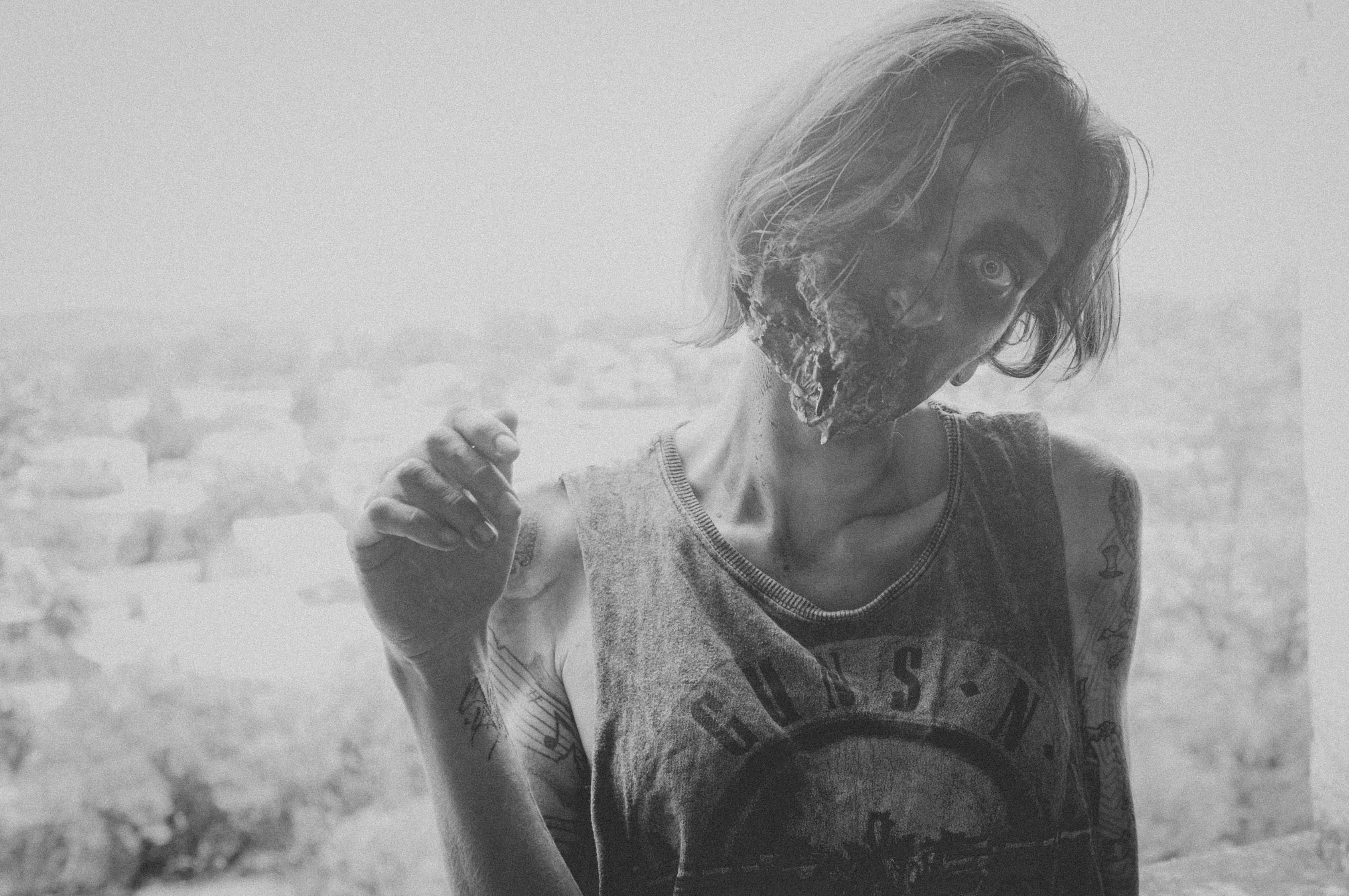
Evil (Greece, 2005) relocates this tradition into the modern city. When an ancient force is discovered beneath Athens, unsuspecting citizens become rabid zombies, transforming familiar streets into a site of frantic survival. The film combines suspense, terror, emotion, and dark humor, while its confrontation between antiquity and urban life marked an important moment in Greek genre cinema. Beneath the city’s contemporary surface, an older violence remains capable of returning.
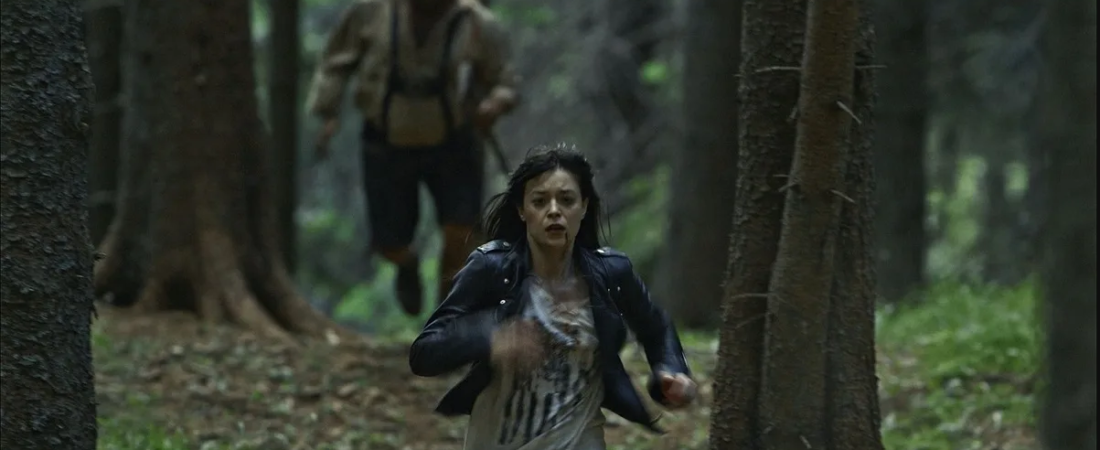
In Idila (Slovenia, 2015), regarded as Slovenia’s first horror film, a fashion shoot in the countryside gradually exposes a nightmare beneath the region’s picturesque appearance. Tomaž Gorkič contrasts lush hills, golden light, stone ruins, and misty valleys with a folk-inspired menace that grows increasingly physical. The result balances carefully composed, art-house imagery against the raw shock of cult cinema, suggesting that beauty can conceal rather than dispel danger.
Post Mortem (Hungary, 2020) places supernatural terror within the aftermath of World War I, the Spanish flu, mass death, and collective mourning. Tomas, a post-mortem photographer, encounters the dead through strange sounds, flour scattered across floors, haunted barns, and restless spirits—traditional ghost-story devices given historical weight. These apparitions are not merely frightening intrusions; they express grief that has found no resolution. Across these films, the supernatural becomes a metaphor for societies forced to live alongside the unresolved remains of their past, where every ruin, legend, and silent landscape may reveal what history has failed to lay to rest.
The tribute’s most intimate horrors emerge when violence enters the body, private fantasy, and ordinary behavior. Dejan Zečević’s T.T. Syndrome (Yugoslavia, 2002), widely regarded as Serbia’s first slasher, places a group of young people inside a Belgrade Turkish bath, where they become trapped overnight and hunted by a ruthless killer. His violence is associated with the fictional neurological condition known as “T.T. syndrome,” giving the film’s direct pursuit structure a medicalized yet deliberately unstable explanation. The confined bathhouse, nocturnal setting, and low-budget production connect it to international slasher conventions, while its regional setting and recognizable performers, including Nebojša Glogovac, establish a distinct Serbian identity. Fear here is physical and immediate, but it also arises from the unsettling possibility that violence can be treated as a condition rather than a choice.
Adrian Țofei’s Be My Cat: A Film for Anne (Romania, 2015) turns obsession into an equally claustrophobic threat. Adrian, an amateur filmmaker, records a video addressed to Anne Hathaway, hoping to persuade her to appear in his project. His initial self-presentation, flattery, and awkward appeals gradually deteriorate into despair, delusion, and escalating menace. The handheld camera begins as a confessional device, then becomes a weapon, blurring performance, documentary, obsession, and real violence. Its restricted budget intensifies that uncertainty, making every frame feel uncomfortably immediate. Aleksandar Petrović’s You Won’t Be Alone (Australia–United Kingdom–Serbia, 2022) approaches identity through atmospheric body horror. After Maria the Spinster abducts and transforms Nevena into a witch, Nevena inhabits the bodies of a mother, a lover, and a young man, learning human experience through painful possession. The film’s disturbing beauty and emotional depth come from its attention to the cost of borrowing other people’s forms: every transformation offers knowledge, but also displacement, grief, and the erosion of a stable self.
The tribute’s greatest value lies in its refusal to define Balkan horror as a single, unified style. Instead, the selected films reveal a flexible field shaped by local legends, national film traditions, war and disease, economic limitations, family structures, and contemporary genre culture. Evil transforms an urban outbreak into a volatile mixture of dark humor and social unease, while Idila draws on folk atmosphere and the isolating power of the landscape. Post Mortem gives historical ghosts a political and emotional presence; T.T. Syndrome adapts Serbian slasher mechanics to claustrophobic, bloody entertainment; and Be My Cat pushes psychological horror and found-footage extremity toward uncomfortable intimacy. In You Won’t Be Alone, identity-centered body horror becomes a poetic inquiry into gender, embodiment, and the possibility of transformation.
These differences matter as much as the films’ shared motifs. Together, they demonstrate how productions working outside dominant horror industries can turn restricted resources into formal invention, distinctive pacing, and memorable atmosphere. The program’s interest in cult classics, B-movies, splatter, and hybrid forms also recognizes that regional genre cinema often flourishes precisely where conventional categories break down. Its accompanying special edition extends this cultural project beyond the screen. Featuring original illustrations by Anel (@anel.f.arts), a pulp-inspired visual identity, and essays tracing horror’s history, prevailing tendencies, and possible future afterlives across the wider Balkan context, the publication frames the tribute as research, preservation, and creative exchange.
The survey therefore celebrates a vital history while suggesting that the region’s horror cinema remains open to reinvention. Balkan monsters may emerge from folklore or the supernatural, but they can also return from buried history, collective memory, family secrets, social violence, or the house next door. By placing these varied works in conversation, the festival invites viewers to reconsider how horror makes the everyday strange—and how that estrangement can expose realities that ordinary forms of representation leave concealed.