
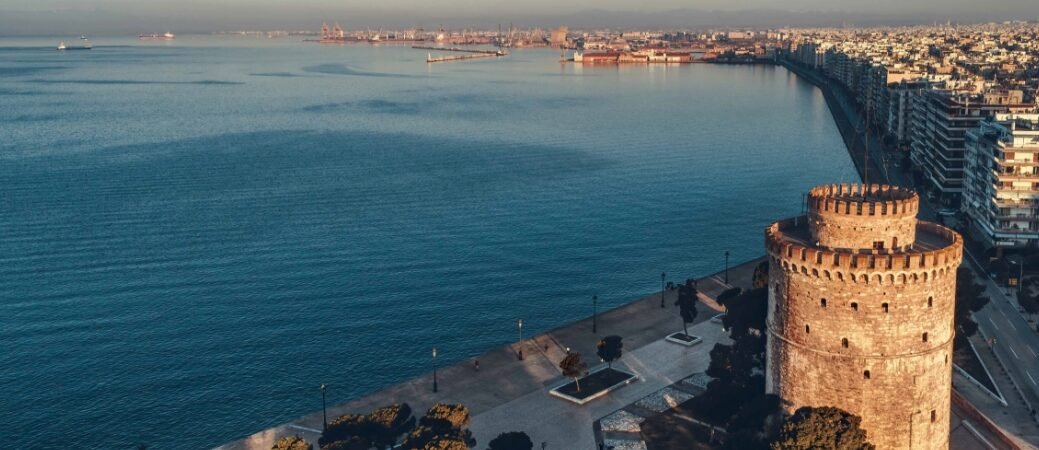
Introduction to Thessaloniki’s Historical Significance
A Glimpse into Thessaloniki’s Historical Background
Thessaloniki, the second-largest city in Greece, boasts a rich historical background that dates back to its founding in 315 BC by Cassander, the King of Macedon. Named after his wife, Thessalonike, who was the half-sister of Alexander the Great, the city quickly developed into a significant maritime and trade hub in the Hellenistic period. Its strategic geographical location at the crossroads of trade routes between Europe and Asia greatly contributed to its prosperity, allowing it to flourish culturally and economically.
During the Roman Empire, Thessaloniki gained prominence as one of the empire’s vital urban centers. Its role as a key port facilitated the exchange of goods, ideas, and cultures, making it a melting pot of various influences. The city thrived under Roman rule, marked by the construction of impressive structures, including the ancient Agora and various public baths. Thessaloniki’s importance continued to grow, positioning it as a vital administrative center in the region and a pivotal node along the Via Egnatia, a major Roman road that connected the Adriatic Sea to the Aegean.
The transition from Roman to Byzantine rule marked another significant chapter in Thessaloniki’s history. As the Byzantine Empire flourished, Thessaloniki emerged as an influential political and religious center. The city became a residence for many Byzantine emperors and a pivotal site for the Orthodox Church. Its numerous churches, many of which are now UNESCO World Heritage Sites, reflect the city’s deep-rooted religious significance and cultural heritage. Thus, through its extensive history, Thessaloniki has maintained its status as a crossroads of civilizations, leaving an indelible mark on the cultural and historical landscape of Southeastern Europe.
Thessaloniki’s Role in the Byzantine Empire
Thessaloniki emerged as a pivotal city within the Byzantine Empire due to its strategic position at the crossroads of Europe and Asia. This advantageous location allowed it to become a significant trade hub, facilitating cultural and commercial exchanges. As a result, Thessaloniki not only played a crucial role in the political sphere but also thrived in the realms of art, religion, and architecture during the Byzantine period.
One of the most notable contributions of Thessaloniki to Byzantine culture was its impressive architectural developments. Significant churches, such as the Church of Hagios Dimitrios, were constructed in this era, reflecting the city’s religious importance and its deep integration into the Orthodox Christian tradition. These buildings were not merely places of worship; they symbolized the Byzantine architectural style characterized by domed structures, intricate mosaics, and elaborate frescoes. The art produced during this time was instrumental in disseminating religious themes and narratives, further solidifying the city’s role as a center of Orthodox Christianity.
Additionally, Thessaloniki served as a center of learning, contributing to the advancement of education and scholarship. The presence of renowned scholars and theologians attracted students from various regions seeking knowledge, creating an intellectual environment that was crucial for the Byzantine Empire’s evolution. The city’s rich history and educational advancements made it a beacon of culture and a repository of knowledge, stimulating the spread of Orthodox Christian teachings and practices across the empire.
In summary, Thessaloniki’s significance during the Byzantine Empire is underscored by its strategic location, contributions to architecture and religion, and its role as a center of learning. The legacy of this vibrant city continues to influence the region’s cultural landscape even today.
Cultural Melting Pot: Influences on Thessaloniki’s History
Thessaloniki, one of the most historically significant cities in Greece, serves as a remarkable illustration of a cultural melting pot where various civilizations have left their indelible marks. Founded in 315 BC, the city has witnessed the rise and fall of various empires, each contributing to its distinctive character. From the Romans to the Ottomans, these influences have played a crucial role in shaping the cultural landscape we observe today.
The Roman Empire first exerted considerable influence over Thessaloniki, transforming it into a bustling trade hub and administrative center. The construction of monumental structures, roads, and aqueducts during this period established the city’s importance in the broader Roman world. Notable architectural remnants, such as the Rotunda and the Arch of Galerius, showcase this Roman heritage and remain significant attractions for visitors today.
With the rise of the Byzantine Empire, Thessaloniki flourished further. It became a key center for Orthodox Christianity and witnessed the construction of numerous churches, many of which are now recognized as UNESCO World Heritage Sites. The city’s ecclesiastical architecture and rich religious traditions reflect the Byzantine influence that continues to manifest in local festivals and cultural practices.
Later, under Ottoman rule, Thessaloniki underwent a significant cultural transformation, adopting many elements of Ottoman architecture and cuisine. The city’s diverse population, which included Greeks, Jews, and Turks, fostered a unique blend of cultural practices that enriched its culinary and social landscapes. This diversity is particularly evident today, especially in the myriad of festivals celebrated throughout the year, highlighting the city’s multicultural heritage.
In contemporary Thessaloniki, these rich cultural influences are palpable, from art galleries showcasing Byzantine artwork to culinary traditions that blend flavors from various cuisines. The city’s vibrant identity continues to be shaped by its multifaceted history, making Thessaloniki not just a historical site but a living testament to the cultural exchanges that define it.
Thessaloniki in Modern Times
In contemporary Greece, Thessaloniki stands out as a vibrant urban center characterized by its rich historical tapestry and dynamic cultural scene. This city, the second largest in Greece, continues to play a pivotal role in not only the national but also the broader Balkan landscape. Thessaloniki’s unique blend of ancient history and modernity makes it an important hub for tourism, culture, and commerce. Visitors from around the globe are drawn to the city not only for its historical landmarks but also for its renowned culinary scene and diverse cultural festivals.
The historical significance of Thessaloniki resonates strongly in its urban fabric, where ancient monuments coexist alongside modern infrastructure. Sites such as the White Tower, the Rotunda, and the Arch of Galerius serve as reminders of the city’s impressive past while also contributing to its contemporary identity. Tourists are increasingly interested in exploring the rich layers of history that Thessaloniki offers, often leading to an increased focus on preservation initiatives aimed at maintaining the integrity of these historical sites.
As the city evolves, there is a growing emphasis on balancing development with heritage conservation. Efforts are underway to protect the unique architectural styles and historical narratives that shape Thessaloniki’s character. The municipality, along with various cultural organizations, is actively involved in projects that promote the sustainable management of historical sites. This commitment not only preserves the city’s historical treasures but also enhances its allure as a tourist destination.
In a rapidly changing world, it is crucial for Thessaloniki to navigate its modernization while honoring its past. The ongoing dialogues about urban development and heritage conservation reflect a collective understanding of the importance of cultural identity in enhancing the city’s appeal. By embracing its historical significance, Thessaloniki retains its charm and continues to thrive as a melting pot of cultures and ideas.
Top Historical Sites to Visit
The White Tower
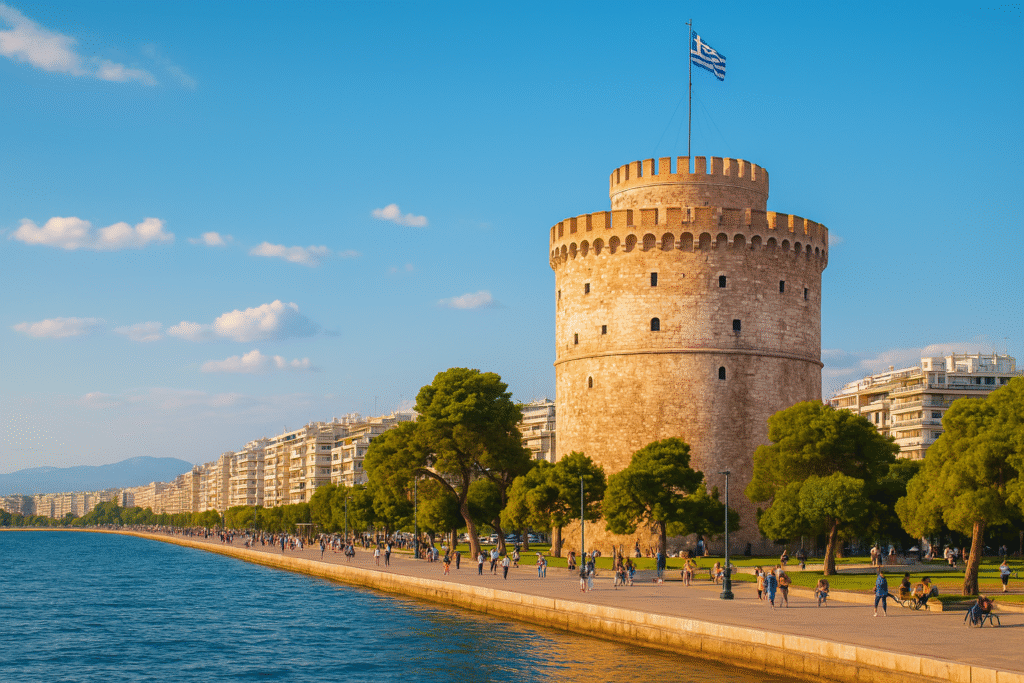
The White Tower stands as an esteemed symbol of Thessaloniki, renowned for its rich history and architectural significance. Constructed in the 15th century, this impressive tower showcases a unique blend of Byzantine and Ottoman architectural styles, reflecting the cultural influences that have shaped the city over the centuries. Originally built as a fortification, the White Tower was used to guard the harbor and served as a watchtower due to its strategic position along the waterfront.
Throughout its existence, the White Tower has held numerous purposes. It was transformed into a prison during the Ottoman period, a role which marked a darker aspect of its history. The transformation from a military structure to a prison illustrates the ever-evolving nature of the site and its significance to the city’s defense mechanisms. The tower also functioned as a place of imprisonment for political dissidents, which adds a layer of historical depth to its narrative.
Visiting the White Tower today offers more than just a glimpse into its storied past; it provides an opportunity to experience breathtaking panoramic views of Thessaloniki from its top. The climb to the viewing platform, while slightly challenging, rewards visitors with a spectacular vista of the cityscape, the bustling harbor, and the Aegean Sea. The current role of the White Tower as a museum further cements its status as a cultural landmark, where one can explore exhibits that delve into the rich history of Thessaloniki.
Overall, the White Tower remains a monumental feature in Thessaloniki, symbolizing strength and resilience through the ages. It is a must-visit for anyone interested in the rich historical narrative of this vibrant city, encapsulating the essence of its past while providing a thrilling view of its present.
The Rotunda of Galerius
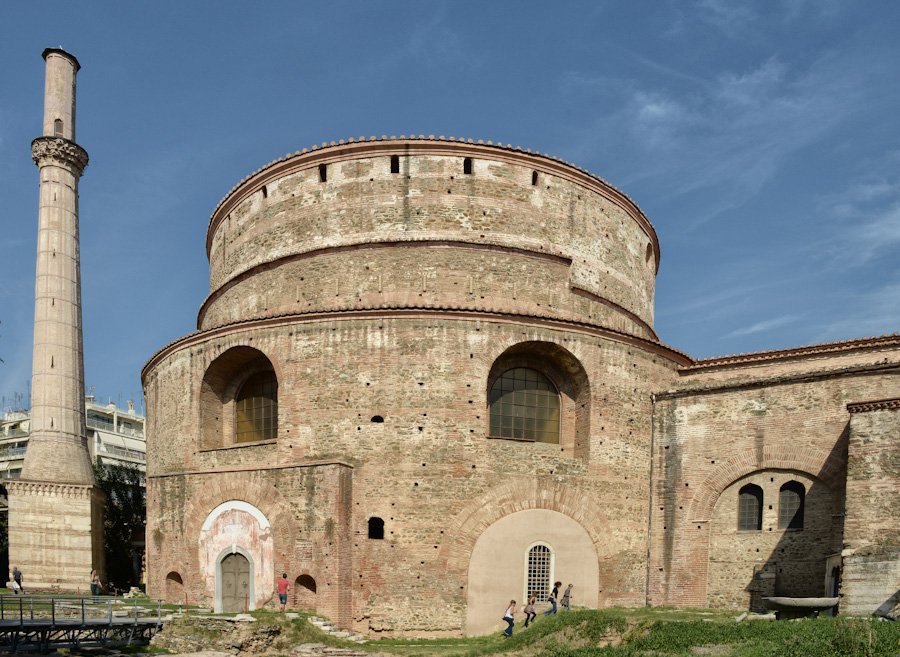
The Rotunda of Galerius, a monumental structure located in Thessaloniki, serves as a remarkable testament to the architectural prowess of the late Roman Empire. Originally constructed in the early 4th century CE, this grand edifice was intended to be the mausoleum for Emperor Galerius. Designed to reflect the emperor’s power and significance, it features a massive circular form that rises impressively with a diameter of approximately 30 meters and walls that reach a height of 29 meters.
Over the centuries, the Rotunda has undergone significant transformations, repurposed as a church following the Edict of Milan in 313 CE and later converted into a mosque during the Ottoman period. Each iteration has left its mark on the structure, showcasing a blend of historical influences and architectural styles. The conversion to a church introduced a rich array of religious artwork, but it is the exquisite mosaics within that truly captivate visitors today. These mosaics, originating from the Byzantine period, depict biblical scenes and figures, conveying spiritual narratives that resonate through time.
The Rotunda’s impressive architecture combines elements of Roman engineering with early Christian artistic expression, creating a unique atmosphere that draws scholars and tourists alike. The dome, adorned with intricate mosaics, was one of the largest ever built during its time. Imposing columns and arches add to the grandeur, while the surrounding area has been thoughtfully landscaped, enhancing the overall experience for visitors.
As a key historical site in Thessaloniki, the Rotunda not only stands as a monument to Emperor Galerius’ legacy but also as a symbol of cultural interchange throughout its history. Given the structure’s rich heritage and artistic significance, the Rotunda remains a must-visit site, inviting exploration and reflection on the layered history of Thessaloniki.
The Arch of Galerius (Kamara)
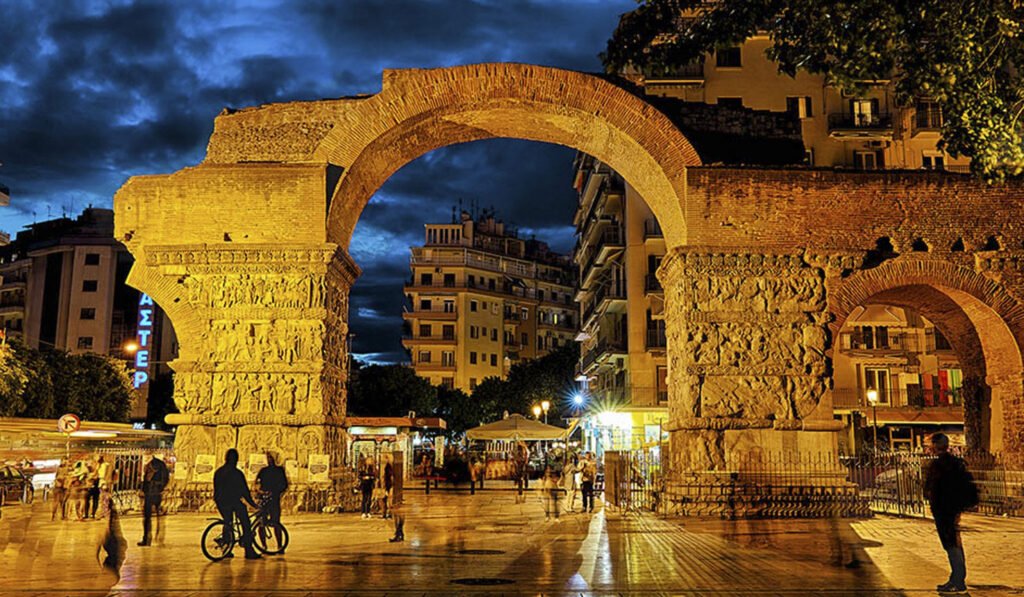
The Arch of Galerius, known locally as Kamara, is a significant historical landmark located in the heart of Thessaloniki, Greece. Constructed in the early 4th century AD, this grand arch was built to honor the Roman Emperor Galerius’ victory over the Persians, marking a pivotal moment in the history of the Roman Empire. Standing as a testament to Roman engineering and artistry, the Arch of Galerius symbolizes the power and glory of the imperial rule.
The architectural design of the arch is a striking example of Roman triumphal arches, characterized by its massive stone blocks and intricate relief sculptures. The arch features four piers, with two primary arches that create a dramatic entrance, leading into the city. The elaborate carvings depict various scenes from Galerius’ military exploits, showcasing not only his victories but also the mythology and divine approval of his rule. Among these are representations of battles, gods, and significant figures, all meticulously sculpted, conveying a rich narrative of ancient Roman culture.
The cultural importance of the Arch of Galerius extends beyond its artistic qualities. It served as a crucial link between the various structures of the Galerian complex, which included the nearby Rotonda and the palace complex of Galerius. This connection highlights the arch’s purpose not only as a commemorative monument but also as a focal point of civic identity in Thessaloniki during the late Roman period. Furthermore, it reflects the city’s role as a major center within the empire, illustrating how the fusion of local traditions and imperial influence shaped the urban landscape. Today, the Arch of Galerius remains a popular attraction for visitors, offering insights into the rich history of Thessaloniki and the enduring legacy of Roman architecture.
The Byzantine Walls of Thessaloniki
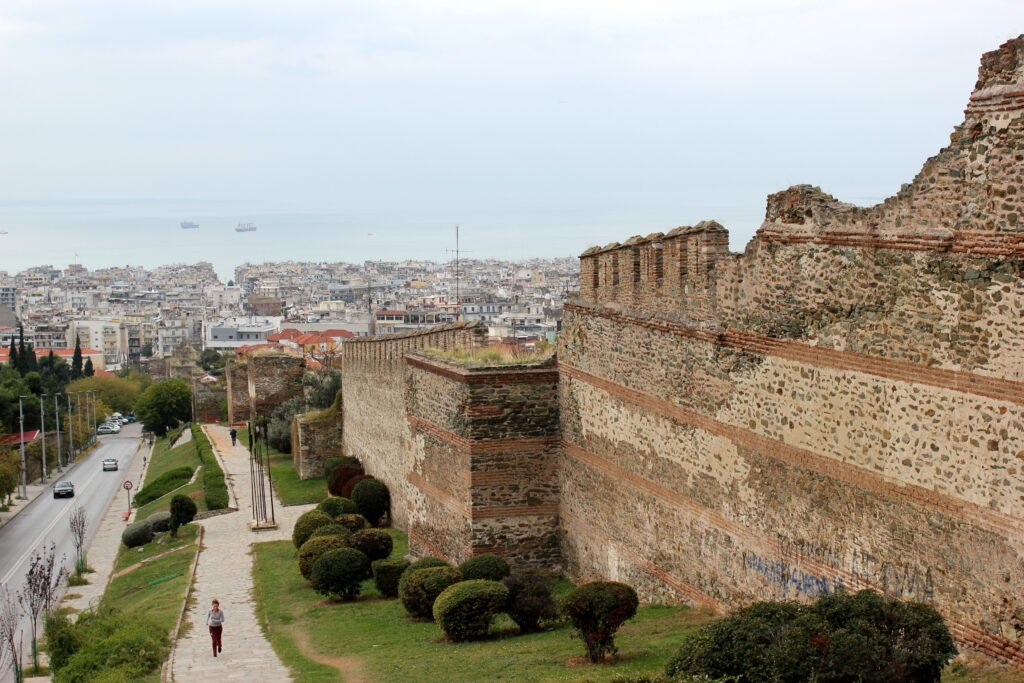
The Byzantine Walls of Thessaloniki are a remarkable historical site that showcases the city’s defensive architecture and offers a glimpse into the rich history of the Byzantine Empire. Built during the late Roman and early Byzantine periods, these extensive fortifications were originally designed to protect the city from invasions and external threats. Stretching for several kilometers, the walls were constructed using local limestone and are characterized by their robust design, including towers, gates, and a series of even higher battlements.
Dating back to the 4th century, the walls were continuously expanded and modified throughout the centuries, reflecting the changing needs of the city and its inhabitants. They were crucial in defending Thessaloniki from various invaders, including the Goths, Ottomans, and other forces that sought to conquer the city. This defense mechanism exemplifies the engineering prowess of Byzantine architecture, which emphasized both functionality and aesthetic appeal.
Today, visitors can explore the remaining sections of the Byzantine Walls, which still evoke a strong sense of history and resilience. The walls not only serve as a monument to the city’s past but also provide stunning panoramic views of Thessaloniki and the Thermaic Gulf. Walking along these walls, one can appreciate the strategic placement and significance of the structure within the urban landscape. Moreover, the surrounding park areas enhance the experience, allowing for peaceful reflection on the historical significance of the site while enjoying the beauty of the city.
Tips for Exploring Thessaloniki’s History
Understanding Thessaloniki’s Historical Significance
Thessaloniki, founded in 315 BC by Cassander of Macedon, is the second-largest city in Greece and possesses a rich historical tapestry that is deeply intertwined with both ancient and modern civilizations. Named after the half-sister of Alexander the Great, the city flourished thanks to its strategic location along the Via Egnatia, the main Roman road connecting the East and West, facilitating trade and cultural exchange.
During the Byzantine Empire, Thessaloniki emerged as a significant urban center. It was a hub for commerce, religious scholarship, and military power. The city’s vibrant blend of cultures culminated in an impressive architecture, which included magnificent churches, many of which are now recognized as UNESCO World Heritage sites. The construction of the Rotunda, initially a mausoleum for Emperor Galerius, and the Hagia Sophia are vivid examples of the architectural prowess of this period.
Moreover, Thessaloniki played a crucial role in both World Wars. In World War I, it served as a primary logistical center for the Allies. This wartime significance was a reflection of its historical military importance, which had always been vital due to its strategic positioning. The city not only endured various occupations but also emerged as a symbol of resilience. The events of World War II, particularly the tragic fate of the Jewish community, have left an indelible mark on Thessaloniki’s modern identity.
As visitors explore the numerous historical sites in Thessaloniki, from the ancient agora to the more recent memorials, understanding the city’s historical significance offers rich context. This background enables a deeper appreciation of the sites and their reflection of the city’s evolution through the ages.
Must-Visit Historical Sites in Thessaloniki
Thessaloniki, Greece’s second-largest city, boasts a rich tapestry of history reflected in its numerous historical sites. Among these, the Rotunda stands out as a profound testament to the city’s Byzantine heritage. Initially constructed as a mausoleum for Emperor Galerius in the early 4th century, this massive circular building has served multiple purposes over the centuries, including as a church and mosque. Its intricate mosaics and impressive dome detail its architectural grandeur, making it a must-visit for history enthusiasts.
Another iconic landmark is the White Tower, often regarded as a symbol of Thessaloniki. This 15th-century fortress has been a vital part of the city’s fortifications. Visitors can explore its interior, which includes an exhibition detailing the city’s maritime history and the tower’s evolution from a prison to a museum. The panoramic views of the Aegean Sea and the city from the tower’s observation deck are an added advantage for tourists seeking an enriching experience.
The Ancient Agora, or marketplace, offers a glimpse into the daily life of Thessaloniki’s ancient inhabitants. Dating back to the Roman era, this site features remnants of basilicas, a Roman forum, and various temples. It provides visitors with insights into the young city’s social, economic, and political life. Artifacts unearthed here are displayed in nearby museums, enhancing the understanding of Thessaloniki’s layered history.
Other noteworthy sites include the Arch of Galerius, a triumphal arch decorated with intricate reliefs, illustrating the Emperor’s victories; and the Church of Agios Dimitrios, commemorating the patron saint of the city. Each of these historical sites contributes to the broader narrative of Thessaloniki, allowing visitors to deeply appreciate its historical significance and architectural wonders.
Best Times to Visit Historical Sites
Exploring the historical sites of Thessaloniki can be a rewarding experience, particularly when visitors select the optimal times for their adventures. One crucial factor to consider is the local climate; the best times to visit are generally in the spring (April to June) and the fall (September to October). During these seasons, visitors can expect pleasant weather, allowing for comfortable exploration without the discomfort of extreme heat prevalent in the summer months.
Moreover, visiting historical sites during these shoulder seasons means avoiding the crowds typical of peak tourist periods found in mid-summer. The influx of tourists reaches its zenith in July and August, leading to longer wait times at popular attractions. Therefore, planning visits from late morning to early afternoon on weekdays can enhance the experience, as these times tend to be less congested.
Additionally, potential visitors should look out for specific events or festivals that may impact site accessibility or crowd levels. For example, local celebrations or historical reenactments can create a vibrant atmosphere but might also draw larger crowds. Purchasing tickets in advance is highly recommended, particularly for famous attractions such as the Rotunda or the Archaeological Museum of Thessaloniki. This approach not only saves time but can also secure better access to guided tours, which often enrich the historical narrative.
It would be prudent to also check the official websites or social media pages of significant sites for updates on any special events, public holidays, or unexpected closures. Ultimately, strategic planning based around seasonal weather, peak times, and ticketing will enhance any visit to Thessaloniki’s remarkable historical landmarks.
Practical Tips for Exploring Thessaloniki’s Historical Sites
Thessaloniki, a city rich in history and culture, offers numerous historical sites that provide insight into its past. To make the most of your exploration, understanding how to effectively navigate these sites is crucial. One of the best transportation options is the local public transport system, which includes buses and trams that connect the city’s main attractions. The metro station is another convenient mode of transport, especially for reaching key historical landmarks.
For visitors who prefer a more immersive experience, walking is highly recommended, particularly in the city center where many historical sites are within walking distance. A pedestrian-friendly approach allows you to appreciate the architecture and atmosphere of the streets. It is advisable to wear comfortable walking shoes and to carry a map or use a smartphone with navigation capabilities to help guide your journey.
When planning your day, consider starting early to avoid crowds, especially at popular sites such as the White Tower or the Rotunda. Joining a guided tour can also enhance your experience, as local tour guides provide valuable insights and stories that you may not discover on your own. Look for reputable tour companies that focus on cultural heritage and have positive reviews from previous visitors.
While exploring, be mindfully aware of local customs. Thessaloniki’s residents appreciate respectful behavior, particularly at religious sites, such as the Byzantine churches. Appropriate attire—such as shoulders and knees covered—is essential when entering these locations. Practice patience and courtesy, which will enrich your travel experience and foster positive interactions with locals.
Related Historical Content for Further Exploration
Introduction to Thessaloniki’s Rich History
Thessaloniki, a city nestled in northern Greece, boasts a rich tapestry of history spanning over 2,300 years. From its founding in 315 BC by Cassander, the city has played a pivotal role in various historical epochs, including the Hellenistic, Roman, Byzantine, and Ottoman periods.
Key Historical Landmarks
The city’s historical offerings are immense, with landmarks such as the White Tower, the Rotunda, and the Arch of Galerius showcasing different eras of architectural and cultural significance. The White Tower, originally built as a fortification, stands today as a symbol of the city’s historical resilience and multicultural legacy. Additionally, the Rotunda, which once served as a mausoleum for Emperor Galerius, has been transformed into a church, illustrating the city’s evolving religious landscape.
Exploring Byzantine Influences
Byzantine heritage is particularly prominent in Thessaloniki. The city is home to several UNESCO World Heritage Sites, including the magnificent Byzantine churches of St. Demetrius and St. Sophia. These cultural icons reflect the city’s pivotal role as a center of Orthodox Christianity during the Byzantine era. Visitors exploring these sites are often left in awe of the intricate mosaics and the narrative of faith and perseverance they represent.
The continued exploration of Thessaloniki’s history allows us to understand not only its past but also its current identity. As one wanders through the city’s streets, the whispers of its rich history can be felt, beckoning further investigation into the layers that define Thessaloniki today.